
EMT · Humanoid robotics
ASTERIOS Physical presence for the real world.
A humanoid programme integrating mechanics, electronics, perception, voice and control with one objective: assisting people and operating in complex environments.
Training completed with public NASA scientific datasets for scientific, space and interplanetary research.
CAD complete · programme in testing and integration
One body. Six disciplines.
ASTERIOS is developed as one system: every domain must share interfaces, constraints and verification with all the others.
01Integrated mechanicsDevelopment domain
Assemblies, joints, transmissions, fasteners and envelopes are developed as parts of a controlled configuration.
02Power and thermal managementDevelopment domain
Power distribution, energy storage and heat rejection are treated as shared architectural constraints.
03Multimodal perceptionDevelopment domain
Perception combines sensors and contextual awareness; performance and limits will be stated only after verification.
04Compute and controlDevelopment domain
Control coordinates motion, balance and behaviour within defined limits, with safety and supervision as system requirements.
05Electronics and interactionDevelopment domain
Power, sensors, computing, wiring, listening and voice must work together, not as isolated demonstrations.
06Verification gatesDevelopment domain
CAD and digital tests are not equivalent to a completed robot: physical integration, safety and qualification remain necessary gates.
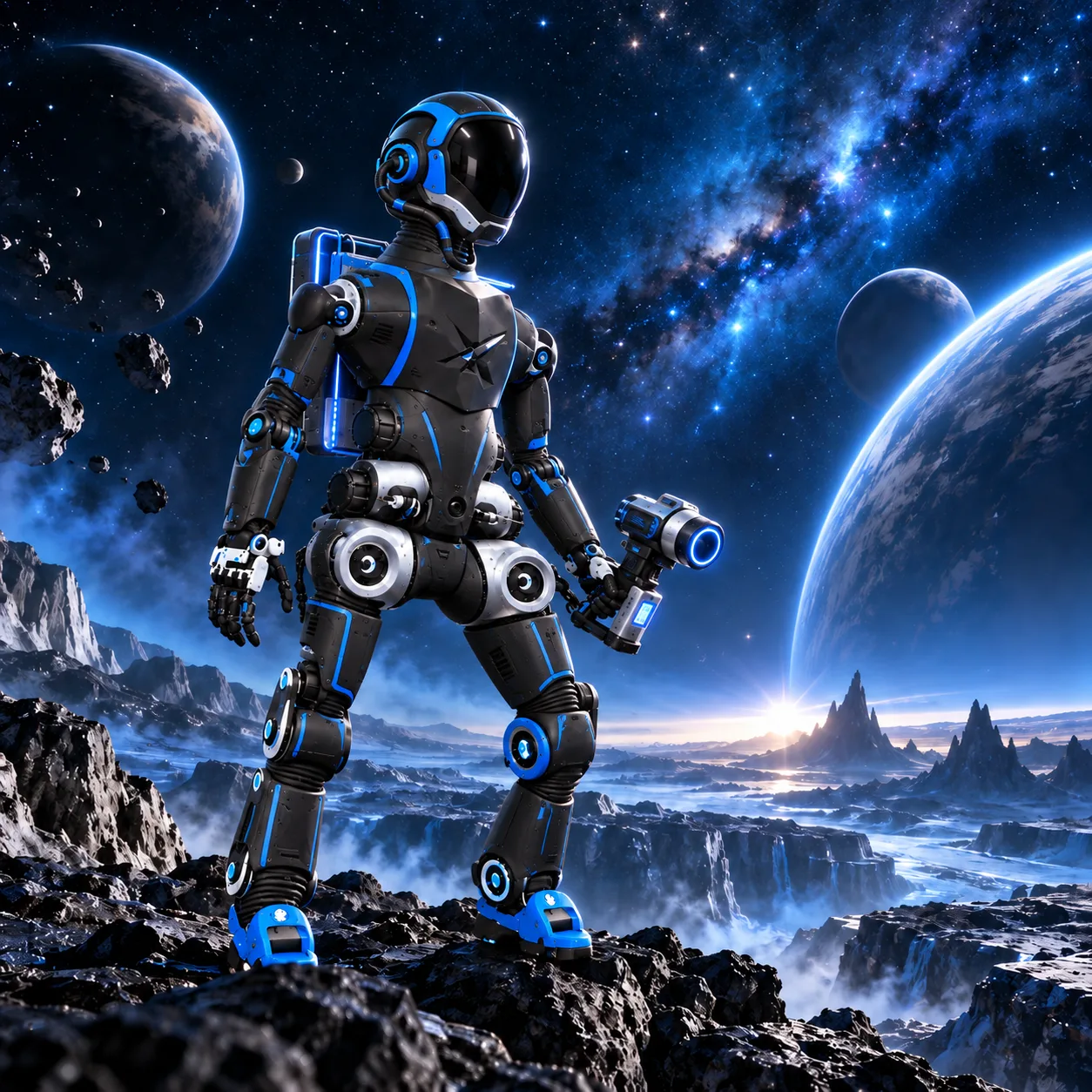
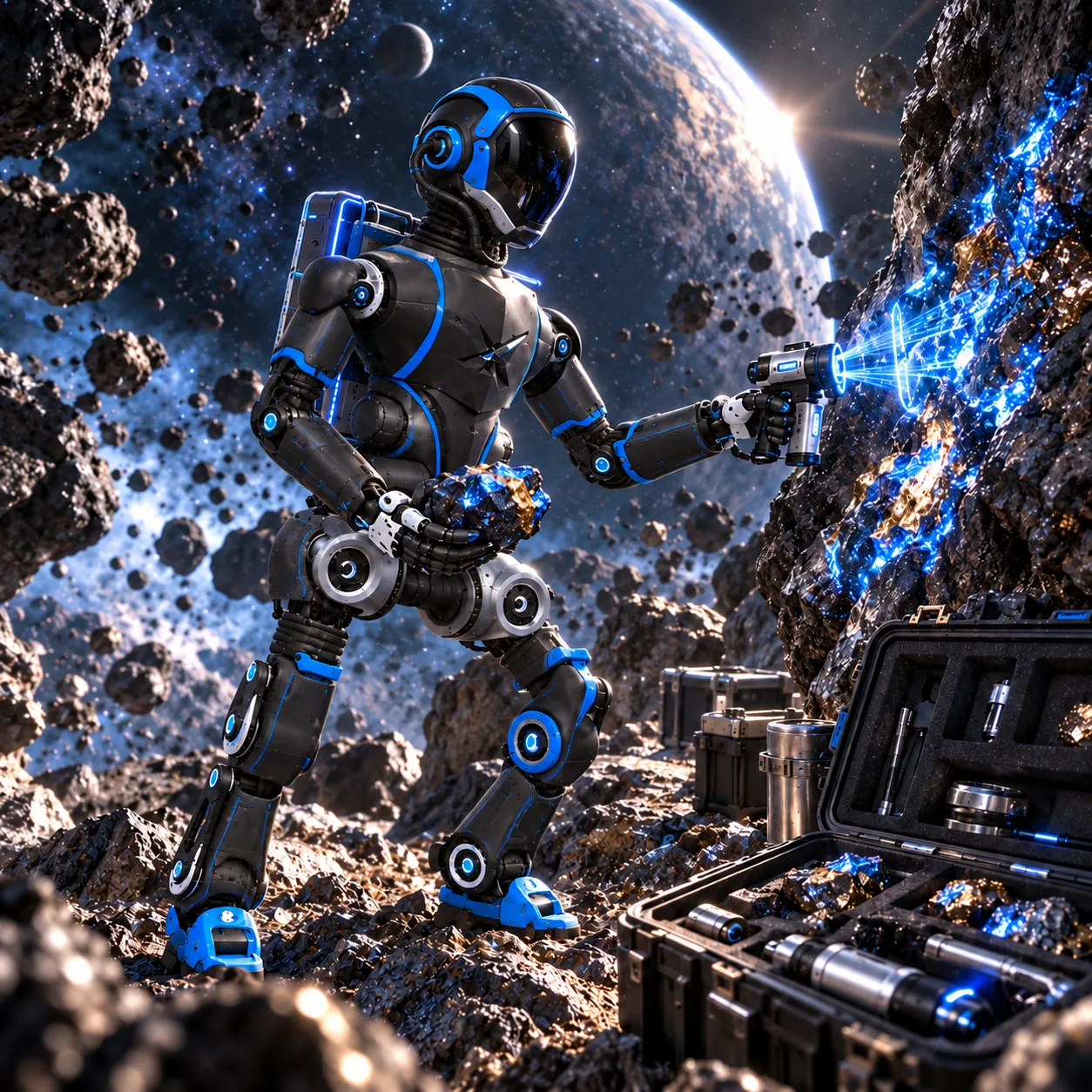
Concept visual of the ASTERIOS programme. It does not depict a completed mission or hardware qualified for the environment shown.
Robotics in everyday life
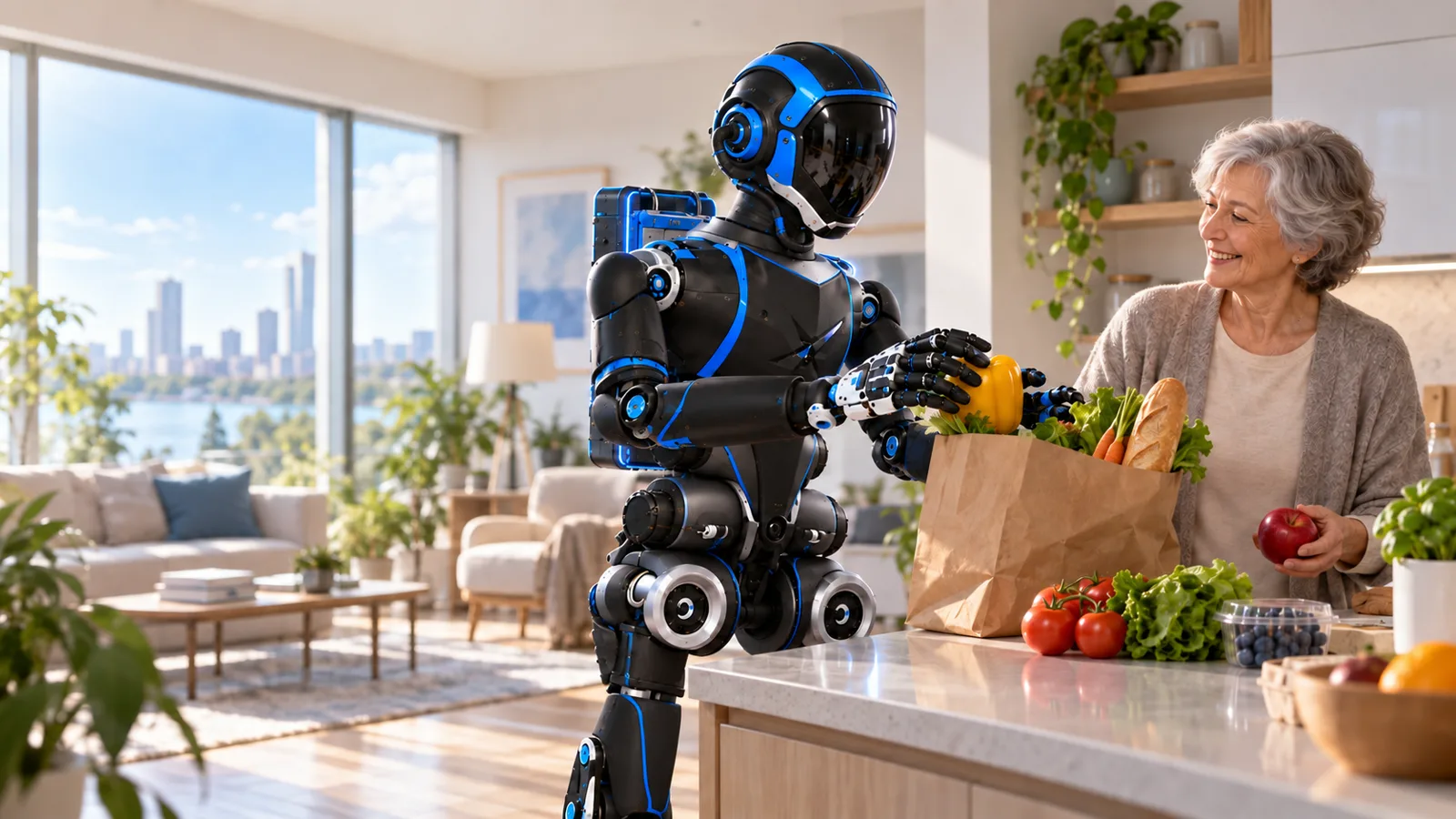
These scenarios show the programme's intended direction: companionship during physical activity, learning support, help with errands and assistance at home. They are concept visuals, not demonstrations of validated capabilities.



From the home to remote environments
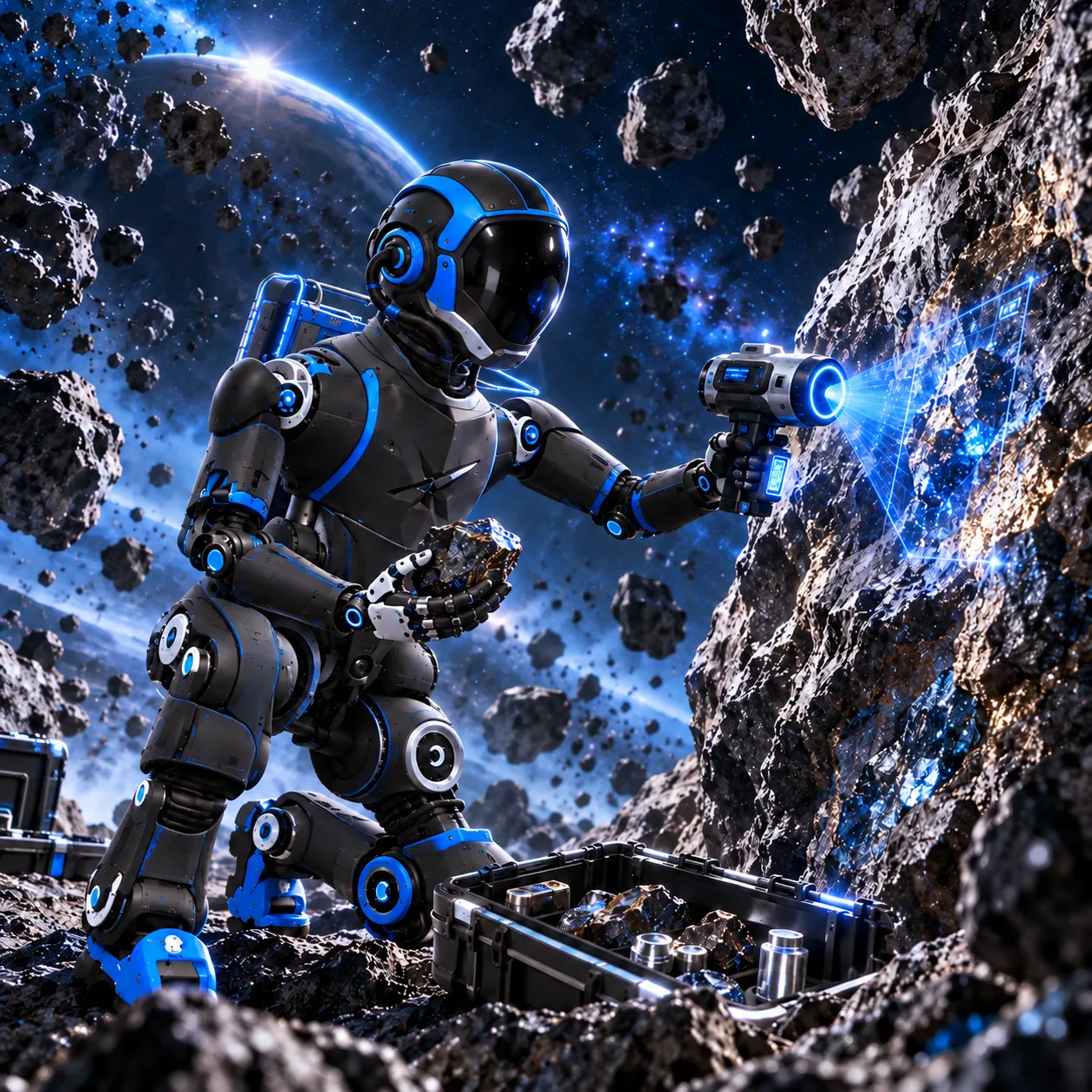
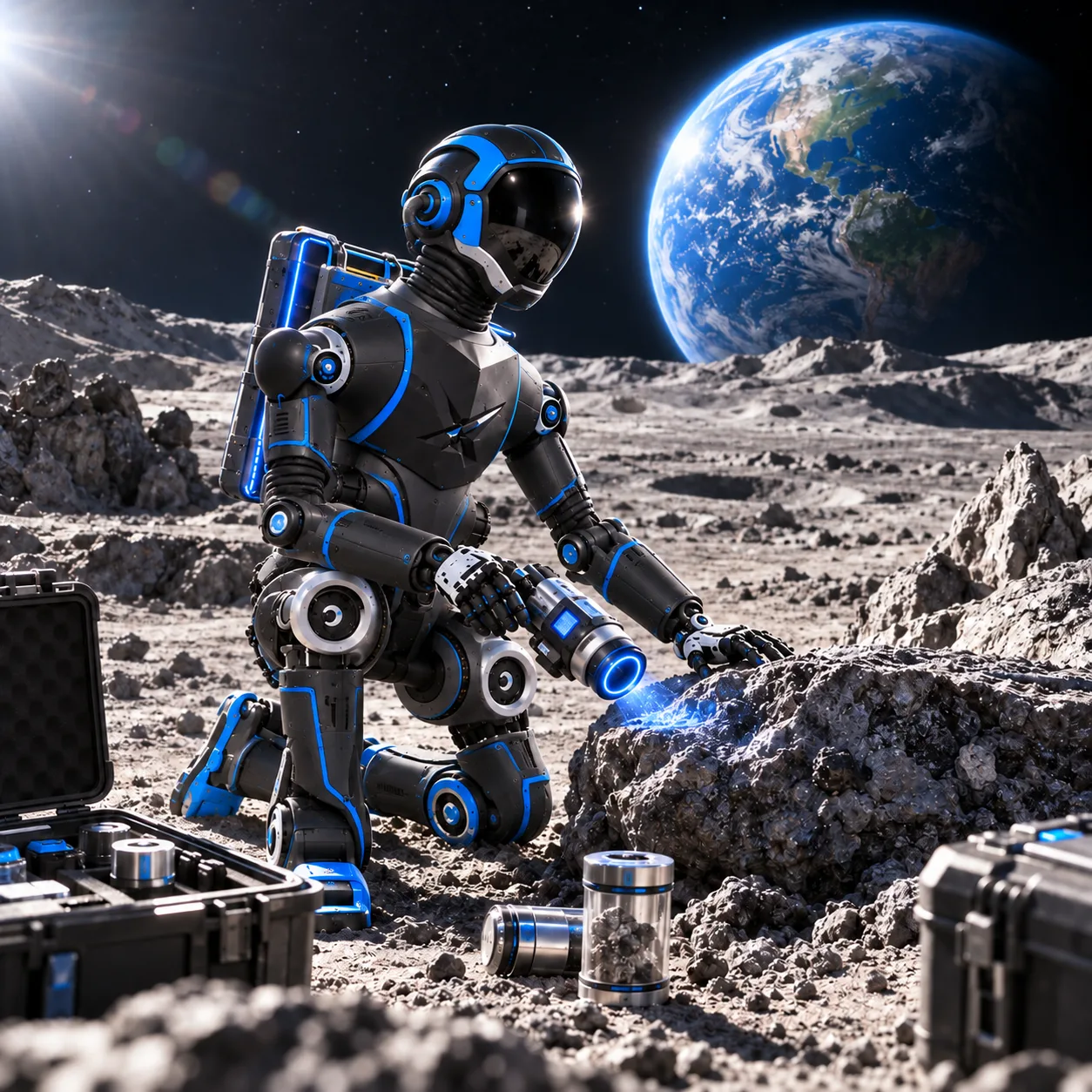
The same integration discipline is intended to extend human work in research, inspection and demanding settings. Subsystem protection, mobility and maintenance remain under development and verification.
Concept visual of the ASTERIOS programme. It does not depict a completed mission or hardware qualified for the environment shown.
Scientific research, controlled provenance
A completed ASTERIOS training phase used selected public scientific datasets made available through NASA archives to support scientific, space and interplanetary research.
NASA is identified solely as the source of public scientific data used in the research programme.
NASA has not sponsored, certified or endorsed ASTERIOS or EMT Aerospace Technologies.
Corpus composition, preprocessing, parameters, architecture, weights and evaluation protocols remain confidential proprietary information.
Use of each dataset remains subject to the terms associated with its collection. Dataset identifiers, composition and technical documentation are not published on this page. No NASA mark or insignia is used. NASA Open Data Portal.
From scientific research to interplanetary exploration
The long-term objective is to develop ASTERIOS into a robot for interplanetary research and exploration. Scientific training is one part of that path: deployment in space requires further testing, integration and qualification for the mission environment.
The real work is in the system
Assemblies, joints, transmissions, fasteners and envelopes are developed as parts of a controlled configuration.
Power, sensors, computing, wiring, listening and voice must work together, not as isolated demonstrations.
CAD and digital tests are not equivalent to a completed robot: physical integration, safety and qualification remain necessary gates.
Frequently asked questions
The most searched answersWhat is ASTERIOS?
ASTERIOS is EMT’s humanoid robotics programme: mechanics, electronics, sensors and interaction developed as an integrated system to support people.
What stage has development reached?
CAD is completed and the programme is undergoing testing and integration. Qualification, validated performance and commercial availability will be announced when demonstrated.
Which applications are planned?
Everyday assistance, learning support, errands, research, inspection and exploration of complex environments are intended programme uses. Each capability requires specific verification.
Do the images demonstrate the robot’s capabilities?
The images are conceptual visualisations of ASTERIOS’s identity and use scenarios. They are not evidence of completed missions or validated physical capabilities.
Was ASTERIOS trained on NASA data?
Yes. A completed training phase included public scientific datasets from NASA archives for scientific, space and interplanetary research. The data’s origin does not imply NASA collaboration or endorsement.
Does NASA collaborate with EMT or endorse ASTERIOS?
No. NASA is cited as a source of public data. NASA does not sponsor, certify, partner with or endorse ASTERIOS or EMT.
Which training information is public?
The source class and scientific purpose are public. The data mixture, preprocessing, hyperparameters, architecture, weights and internal evaluation protocols remain confidential industrial property.
Does ASTERIOS replace scientific verification?
No. ASTERIOS is designed to assist research and analysis, but every result must be checked against primary sources and the methods applicable to the discipline.
CAD complete · programme in testing and integration
ASTERIOS is open to qualified collaboration.
For research, components, production and industrial integration, every discussion begins with requirements and current status.