
Space Division
Program AETHER
The framework within which EMT designs the methalox AETHER B engine and the reusable modular Orbital Lume launcher — for access to space designed around reliability and hardware reuse, from low Earth orbit to the Moon.
Operations · real time
Earth–Moon orbital study
Real Earth and Moon positions at the current UTC instant, with Orbital Lume reference missions — from Aether-1 in low Earth orbit to Aether-5 toward the Moon.
WebGL · 1:1 clocks · reference study, not an in-flight mission
AETHER B engine
The program's first engine: a methalox liquid-propellant rocket engine (LOX/LCH₄), designed in-house and developed with a subsystem-by-subsystem validation plan. It is the launcher's common engine, in the first stage and — in an extended-nozzle variant — in the upper stage.
- Thrust class
- ~758 kN (design value, at system level)
- Propellants
- Methalox — LOX / LCH₄
- Cycle
- Gas-generator (Block 1)
- Features
- Reusable · restartable · throttleable
- Role
- Common engine of the launcher
Values expressed at system level. Detailed parameters, geometries and materials are confidential.
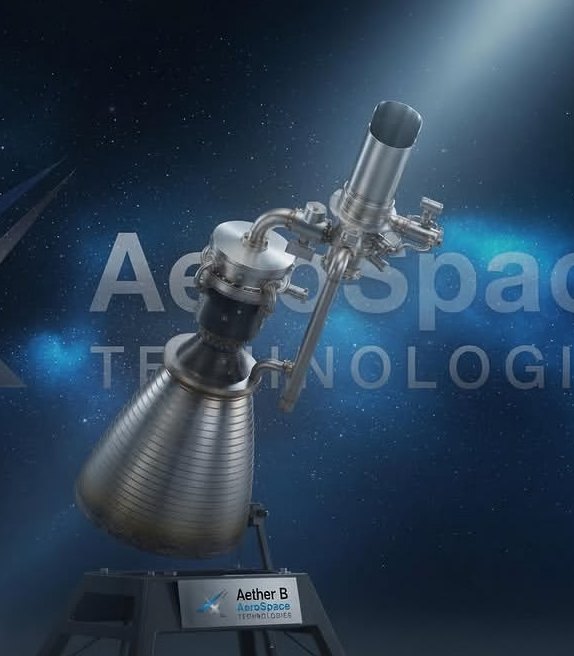 CAD model render
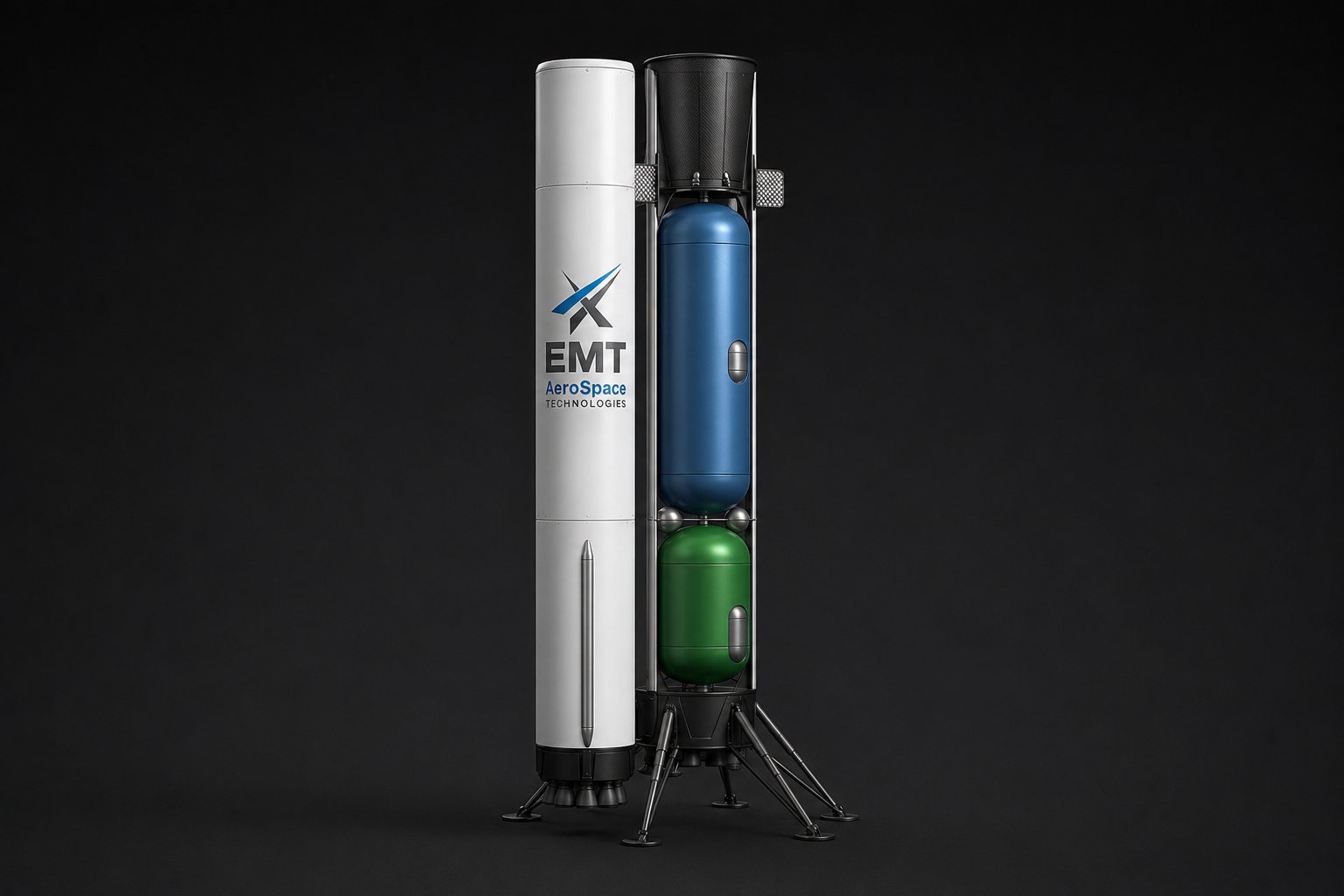 CAD model render
Orbital Lume launcher
A modular two-stage, reusable architecture. A common Core with nine AETHER B engines (1+8 layout, tolerant to the loss of one engine) is the basis of all configurations; two side boosters in cross-feed enable lunar missions; the upper stage serves satellites or, in an ogive version, the crew.
- LEO configuration
- ~19 t class to low Earth orbit
- Lunar configuration
- Trans-lunar capability (TLI) · architecture prepared for future crew qualification
- Reuse
- Propulsive return (RTLS) · target 50 flights
- Safety requirements
- Engine-out · crew abort (LAS)
System-level design values, being consolidated with real masses.
Method & missions
Formal review gatesGradual, verifiable development, marked by formal gates (MCR → SRR → PDR → CDR → SIR → FRR) and progressive reference missions.
LEO flight
Inaugural flight to low Earth orbit and recovery of the Core.
Operational & reuse
Operational payload and Core reuse cadence.
Uncrewed Moon
27-engine + cross-feed configuration, trans-lunar injection.
Crewed Moon
Long-term target: human-rated qualification and crewed lunar mission.
Standards & responsibility
The program takes as technical reference the applicable international standards — in particular ECSS and ISO, which EMT has not yet certified — and is conducted in compliance, which is binding, with applicable rules on industrial safety, environmental protection and export control, in the country of origin and of destination.
Philosophy
Aerospace technologies allow no shortcuts. We characterize and validate every critical subsystem before integration, with real geometries and repeatable results. Detailed vehicle design proceeds upon the verifiable passing of propulsion validation milestones.
Images are concepts for illustrative purposes. Detailed design parameters, geometries, materials and architectures of the AETHER Program are confidential intellectual property of EMT Aerospace Technologies S.r.l., communicated exclusively under Non-Disclosure Agreement.
Frequently asked questions
The most searched answersWhat is the AETHER B engine?
AETHER B is the methalox rocket engine (liquid oxygen and liquid methane, LOX/LCH₄) of the AETHER program, gas-generator cycle, in the ~758 kN design thrust class at system level, a value to be confirmed by the integrated hot-fire. It is the common engine of the Orbital Lume launch vehicle: reusable, restartable and throttleable.
What does 'methalox' mean?
Methalox refers to the propellant pair liquid oxygen (LOX) and liquid methane (LCH₄). It is chosen for its good balance of performance and cost, because combustion leaves fewer carbon deposits in the chamber — a condition favorable to engine reuse — and for easier handling than other propellants.
What is the Orbital Lume launch vehicle?
Orbital Lume is EMT's modular, two-stage, reusable launch vehicle. A common Core with nine AETHER B engines (1+8 layout, tolerant to the loss of one engine) is the basis of all configurations; two side boosters enable lunar missions.
Is AETHER B reusable?
Yes. AETHER B is designed for reuse: it is restartable and throttleable, to allow the launcher's propulsive return (RTLS) and multiple flights with the same hardware. The design target is of the order of 50 flights per Core.
How far along is the AETHER program?
Development is gradual and verifiable. EMT has begun the subsystem test campaign of the AETHER B engine, which will culminate in the first integrated hot-fire. The published values are design values, at system level; detailed parameters are reserved.
Does AETHER also aim at lunar missions?
Yes. The Orbital Lume architecture provides for a low-Earth-orbit configuration, with a design capability of the order of 19 t to LEO still being consolidated on real masses, and a lunar configuration with cross-feed boosters and trans-lunar capability, following a roadmap of progressive missions (Aether-1 → Aether-5).